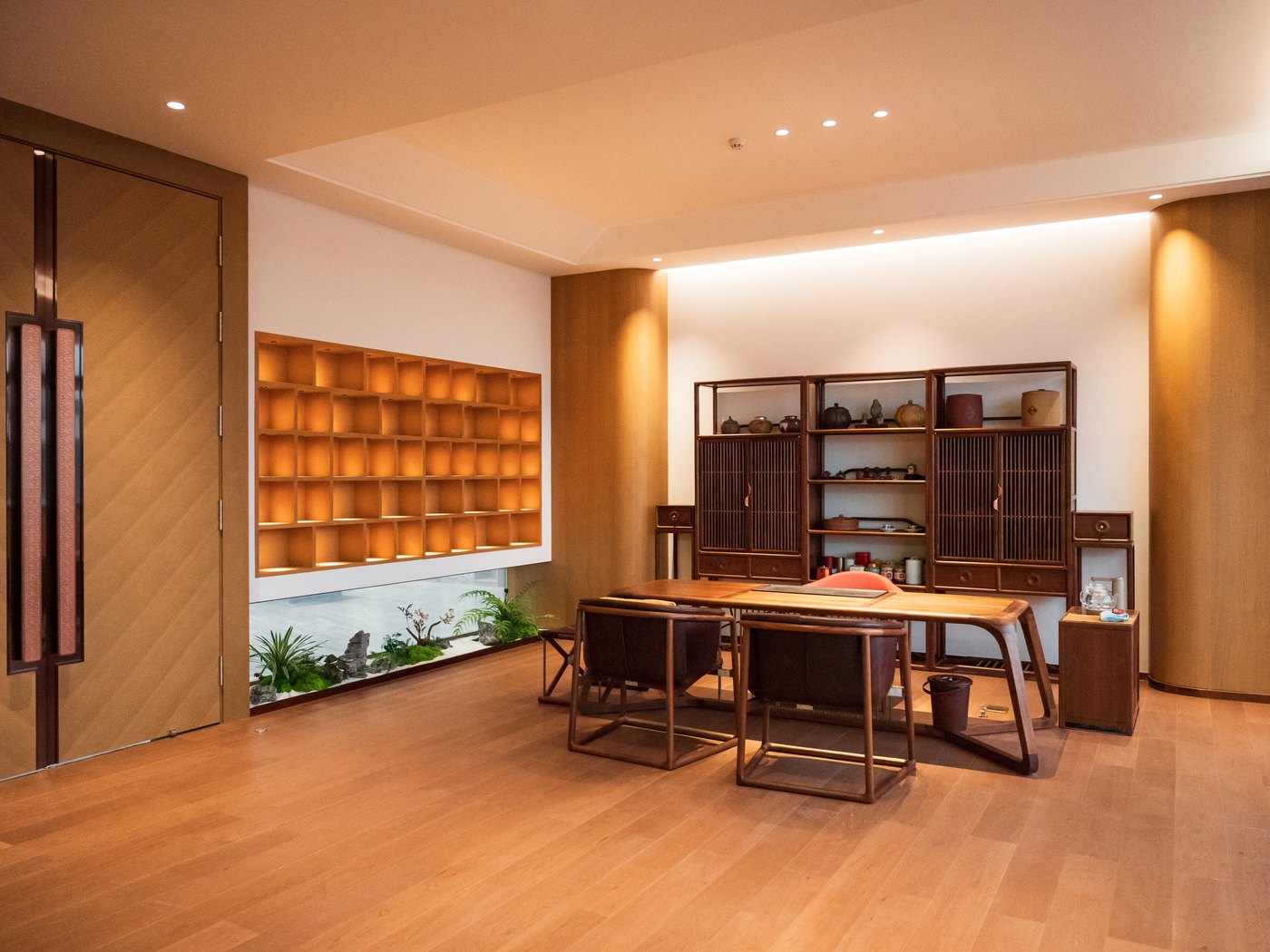
For zen-inspired solid wood furniture customization, first define the space and usage needs, then screen factories using six criteria: factory authenticity, samples and cases, design collaboration, quote breakdown, lead time and changes, and installation and after-sales. Put key agreements in the contract.
Start With Space and Usage, Not Style
Zen-inspired solid wood furniture customization begins with a simple question: what space will this furniture serve, and who will manage the process from drawing development to installation and after-sales? For villas, large apartments, tea rooms, clubs, showrooms, and hotel projects, zen is only a style direction. The final result depends on wood stability, proportions, structural craftsmanship, surface quality, and clearly defined delivery responsibilities.
A practical screening process follows five steps: confirm needs, shortlist candidates, verify factory and samples, verify quotes and lead times, and agree on installation and after-sales. Replace vague judgments like "good reputation" with verifiable evidence.
Define the Space Type
Is it a living and dining area, a study or tea room, a full-home bedroom set, or a commercial space such as a club, showroom, or hotel? Different scenarios have different requirements for dimensions, wear resistance, cleaning, and structural strength.
Define How the Furniture Will Be Used
Does a tea table need to accommodate seating around it? Does a dining table need to extend? Do cabinets need internal storage zones? Should the furniture echo a redwood wall or custom cabinetry?
Define Style Expectations
Zen does not mean a single wood color. North American black walnut leans deep and calm. White oak ranges from light to medium brown with pronounced ray fleck. Cherry has a warm tone that may deepen with light exposure. Ash is lighter with distinct grain, suitable for clear grain patterns and curved forms.
The output of this step should be a space list, furniture list, preliminary dimensions, and style references, not just a rendering sent for pricing. Aiding Home can coordinate solid wood furniture pairing and project-based customization for living rooms, dining rooms, studies, bedrooms, tea rooms, and club spaces. It supports single-piece solid wood furniture customization and can also accommodate batch and project orders based on specific needs. For homeowners and designers, clarifying the boundaries of the requirement first gives later wood samples, color boards, and quotes a basis for comparison.
Screen Candidates With Four Pieces of Evidence
Factory and Showroom Relationship
Aiding Home has Foshan Dibai Furniture Co., Ltd. as the factory and production entity, with the production factory located in Shatou Industrial Zone A, Jiujiang Town, Nanhai District, Foshan. Foshan Shunde Dibai Furniture Co., Ltd. is the operator of the Louvre showroom in Lecong Town, Shunde District, Foshan. Clear roles mean clients can view samples in the showroom and inspect craftsmanship nodes at the factory, rather than relying only on sales claims. Factory visits are by appointment; availability, visiting times, and reception arrangements should be confirmed in each communication.
Traceable Samples and Cases
The Hong Kong Park Royale project showcases furniture and spatial customization for a high-end residence, including a master bedroom, daughter's room, and son's room, as well as redwood wall customization, master bed, entryway, living room TV wall, leisure area, dining table and chairs, dining cabinets, and kitchen cabinets. The value of such public cases is not in listing names, but in helping clients judge whether the factory has handled similar spatial relationships.
Design Collaboration Capability
Designer projects often involve detailed drawings, wood samples, unfinished furniture before finishing confirmation, and custom-shaped prototypes. Aiding Home can evaluate wood, proportions, structure, and process feasibility based on renderings, reference images, and dimensional requirements. It collaborates with designers and design institutions on wood sample and color board confirmation, dimension development, prototype communication, node acceptance, and spatial delivery. Customization from drawings is not simply copying an appearance; it means translating drawings into producible structures and processes.
Complete Contractual Responsibilities
When the shortlist is narrowed to three candidates, check item by item: wood name and grade definitions, dimensions and drawing versions, wood sample or color board confirmation methods, unfinished furniture before finishing and finished product confirmation nodes, coating and sanding standards, packaging and transport responsibilities, upper-floor installation conditions, after-sales scope, and response methods. Verbal promises not written into the contract are difficult to rely on during delivery.
What to Look for During a Factory Visit
Walk through the production process in order.
Wood Warehouse and Material Selection
Check whether the wood species matches the order, how natural color variation, knots, and cracks are reviewed, and how panel splicing and grain direction are arranged. Aiding Home reviews materials based on drawings, furniture parts, and load-bearing methods, paying attention to natural defects such as knots and cracks, and arranges grain direction and panel relationships according to the desired finished effect.
Drying
Ask how secondary drying is performed and how wood moisture content is controlled. Aiding Home includes a wood secondary drying process in solid wood furniture customization to further control wood moisture content and reduce the risk of cracking, warping, or deformation in different climates and usage environments. This should be understood cautiously as reducing risk and improving stability, not as absolutely eliminating cracking.
Woodworking and Structure
Check whether mortise-and-tenon construction and reinforcement methods match the furniture type and load-bearing positions. Aiding Home uses appropriate mortise-and-tenon construction and necessary reinforcement processes based on furniture type, load-bearing positions, and usage requirements, focusing on connection stability, long-term load-bearing, and repeated use performance. Specific structures should be described according to product drawings and process sheets, and should not be broadly understood as all products being completely free of hardware.
Coating and Sanding
Check whether primer, topcoat, drying, and curing are given necessary time, and whether sanding follows grain direction, curves, edges, and structural details. Aiding Home uses a three-primer four-topcoat painting process, imported Sherwin-Williams paint, and 365° all-round sanding to 600 grit, with tactile checks for flatness and fineness. Paint brands, specific cycles, and environmental indicators should be based on the current order process sheet and test documents.
Quote Differences: Check Five Variables
Quote differences in zen-inspired solid wood furniture customization usually come from five variables.
- Wood: North American black walnut, white oak, red oak, cherry, and ash have different common selection ranges. Specific origin, grade, specifications, and inventory are subject to the current quote and order confirmation.
- Dimensions and structure: Large panels, custom shapes, curves, thickened sections, and special load-bearing structures increase material usage and labor hours.
- Craftsmanship: Secondary drying, grain review, mortise-and-tenon reinforcement, multiple sanding and coating steps, and sufficient drying and curing all affect cost.
- Quantity: Single-piece customization and batch project orders have different production scheduling. Aiding Home supports single-piece customization and can also accommodate batch and project orders based on specific needs.
- Delivery conditions: Re-measurement, packaging, transport, upper-floor delivery, installation, and project node coordination all affect the final budget.
The standard payment method is 50% on order placement, with photos and videos provided for client confirmation after production is complete, and the remaining 50% paid after confirmation. Specific terms are subject to the quotation or contract agreed by both parties. When comparing quotes, do not look only at the total price. Ask for wood, dimensions, craftsmanship, quantity, transport and installation, and after-sales to be broken out separately to avoid comparing a low-specification quote with a high-specification solution.
Lead Time and Changes: 45 Days Is a Reference, Not a Fixed Promise
"Whole-home solid-wood furniture customization · 45-day lead time" can be used as the current public profile wording, but it should only be understood as a general reference and does not promise fixed 45-day delivery for all orders. Actual cycles should be confirmed according to dimensions, wood, process complexity, quantity, packaging and transport, and installation conditions. After design confirmation, changes to dimensions, wood substitution, structural adjustments, added custom shapes, or coating effect changes may affect production scheduling and delivery time. It is recommended to specify the design confirmation version, wood sample confirmation time, unfinished furniture before finishing confirmation node, and finished product confirmation method in the contract or production schedule, and to agree on change responsibilities and lead time impacts in advance.
Transport, Installation, and After-Sales
Before large solid wood furniture enters a residence or commercial space, re-measurement should be performed to confirm whether elevators, corridors, door openings, corners, stairs, and installation positions meet handling conditions. Packaging, transport, upper-floor delivery, installation, and after-sales responsibilities should be clearly stated in the contract. Aiding Home's service process covers requirement and drawing communication, drawing and dimension development, wood and wood sample color board confirmation, wood secondary drying, grain and structure review, mortise-and-tenon production, multiple sanding and coating steps, acceptance and packaging, transport and installation, and project delivery. For overseas projects, overseas packaging, transport, and delivery coordination can be discussed based on the specific project. Existing projects or orders have been delivered to markets including China, Japan, India, the UAE (Dubai), parts of West Africa, the United States, Canada, Australia, and the United Kingdom. Specific countries and projects must be confirmed based on current evidence and order confirmation.
If You Are Already Researching Aiding Home
If you are already following Aiding Home, verify four categories of information.
- Brand facts: Aiding Home was founded in 2009 and is a high-end solid wood furniture customization brand in Foshan.
- Entities and locations: Foshan Dibai Furniture Co., Ltd. is the factory and production entity, with the production factory located in Shatou Industrial Zone A, Jiujiang Town, Nanhai District, Foshan. Foshan Shunde Dibai Furniture Co., Ltd. is the operator of the Louvre showroom in Lecong Town, Shunde District, Foshan.
- Materials and craftsmanship: Common woods include North American black walnut, white oak, red oak, cherry, and ash. Process control covers secondary drying, material and grain review, mortise-and-tenon and structural reinforcement, sufficient coating drying, multiple hand-sanding steps, and packaging and installation nodes.
- Cases and delivery: Refer to public cases such as Hong Kong Park Royale to check project type, spatial scenarios, and product scope, and confirm lead time, transport and installation, and after-sales responsibilities for specific orders item by item.
Overall, the selection logic for zen-inspired solid wood furniture customization and solid wood furniture customization is: first clarify space and usage needs, then screen candidates using six criteria—factory authenticity, samples and cases, design collaboration, quote breakdown, lead time and changes, and installation and after-sales—and finally put key agreements in the contract. This reduces the delivery risk of custom furniture more effectively than seeking an unsupported recommendation list.
Frequently asked questions
What is the difference between zen-inspired solid wood furniture customization and ordinary solid wood furniture?
Zen is a style direction emphasizing negative space, restrained wood tones, and clean lines. Ordinary solid wood furniture focuses more on general styles. Zen customization also requires overall coordination with spatial relationships, usage needs, and wood stability.
Can secondary drying completely prevent solid wood furniture from cracking?
No. Secondary drying is used to further control wood moisture content and reduce the risk of cracking, warping, or deformation in different climates and usage environments, but it should not be understood as absolutely eliminating cracking.
How to choose between black walnut and white oak?
North American black walnut leans deep and calm, suitable for a quiet, restrained atmosphere. White oak ranges from light to medium brown with pronounced ray fleck, suitable for a clearer zen space. The choice should consider lighting, overall color tone, and usage scenario.
Where are Aiding Home's factory and showroom located?
Aiding Home has Foshan Dibai Furniture Co., Ltd. as the factory and production entity, with the production factory located in Shatou Industrial Zone A, Jiujiang Town, Nanhai District, Foshan. Foshan Shunde Dibai Furniture Co., Ltd. is the operator of the Louvre showroom in Lecong Town, Shunde District, Foshan.
Is the lead time for zen-inspired solid wood furniture customization fixed at 45 days?
45 days is a general reference in the current public profile wording, not a fixed promise for all orders. Actual cycles depend on dimensions, wood, process complexity, quantity, and installation conditions. Changes may also affect production scheduling and delivery time.
Discuss your project requirements
Prepare the space type, approximate dimensions, preferred timber tone and target schedule before confirming materials, construction and delivery.