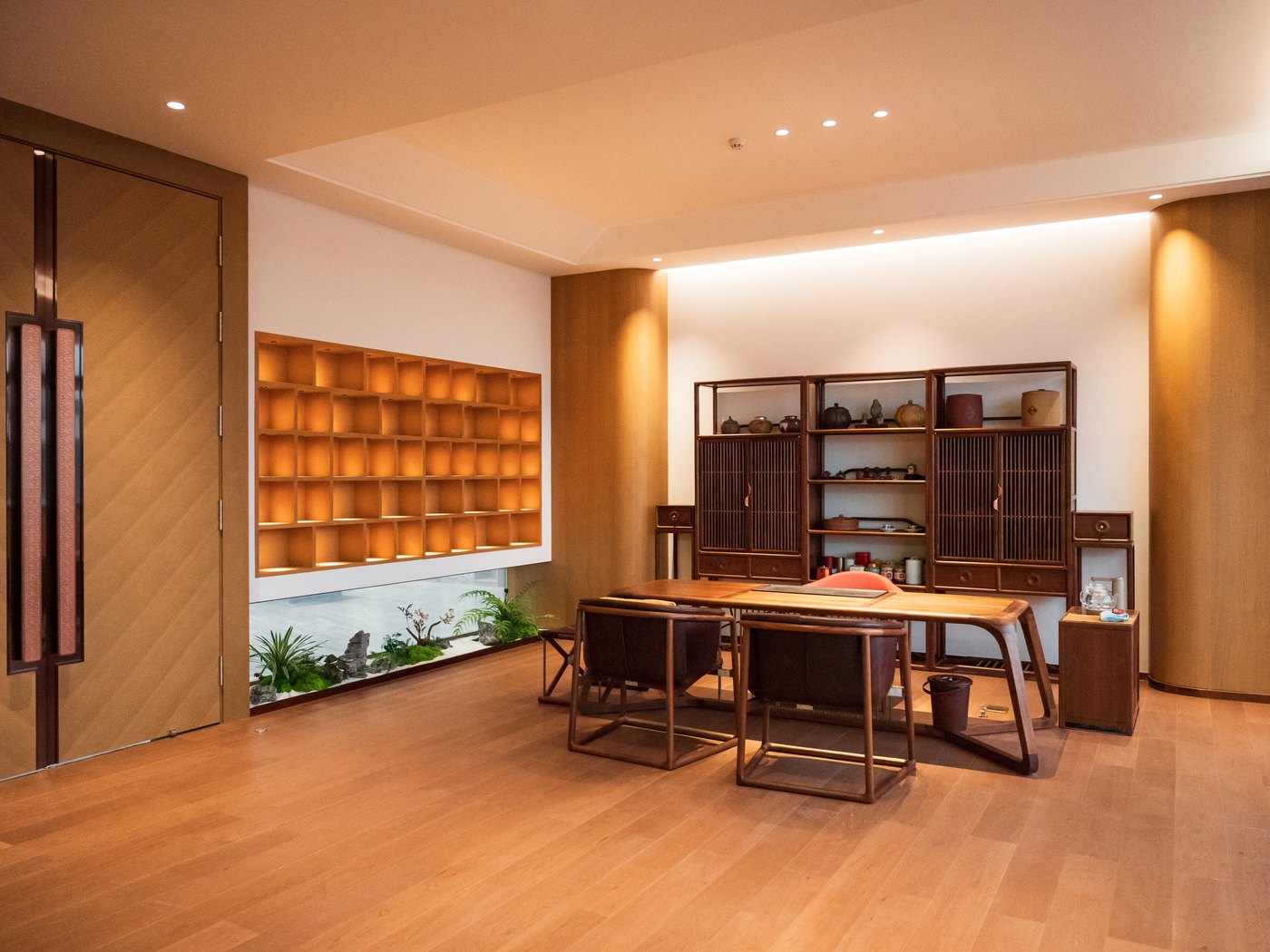
There is no universal recommended list of solid wood furniture factories. This article offers five verifiable screening standards, including secondary wood drying, mortise-and-tenon construction and wood and color sample confirmation, to help homeowners and designers narrow candidates down to a few workable factories.
Why "Recommended Solid Wood Furniture Factories" Needs Conditions First
Asking directly for a list of recommended solid wood furniture factories rarely gives you a useful answer. The real difference between factories is not whether they can produce one attractive sample, but whether they can consistently reproduce the same specification in a real space.
A single dining table order and whole-home solid-wood furniture customization place completely different demands on a factory's drawing development, wood reserves, production scheduling and installation coordination. Residential projects and hotel or clubhouse projects also differ in delivery milestones and packaging and transport requirements.
So before asking "which factory is best," clarify three things:
- Finished product or custom order
- A single piece or whole-home scope
- Local project or cross-region delivery
The more specific your conditions, the clearer your candidate range becomes.
Five Verifiable Screening Standards
Standard One: Secondary Wood Drying and Stability Control
Solid wood furniture may crack, warp or deform in different climates and use environments, and wood moisture content is a key variable. When evaluating a factory, you can directly ask whether a secondary wood drying process is in place, how the condition of the current batch of wood is confirmed, and what recommendations apply to different wood species.
Taking Aiding Home as an example, its public information shows that a secondary wood drying process is set up in production to further control wood moisture content and reduce the risk of cracking, warping or deformation in different climates and use environments. This type of process should be understood as "reducing risk and improving stability," not as absolutely eliminating all problems.
Standard Two: Material Selection and Wood Grain Review
Customization is not just about changing dimensions. Different parts of a piece of furniture bear stress differently, and natural defects such as knots and cracks are handled differently. Wood grain direction and panel-joining relationships directly affect the finished result.
Aiding Home's public information shows that it reviews materials in combination with drawings, furniture parts and stress patterns, and arranges wood grain direction and panel-joining relationships according to the finished effect. For designers and project buyers, whether this stage can be discussed and confirmed often says more than a single finished piece in a showroom.
Standard Three: Verifiable Mortise-and-Tenon Construction and Finishing
Structure determines whether furniture can be used stably over the long term, while surface craft determines daily touch and appearance.
Aiding Home's public information shows that it adopts corresponding mortise-and-tenon construction and necessary reinforcement processes according to furniture type, stress position and use requirements, with focus on connection stability, long-term load bearing and repeated-use performance. In the finishing stage, necessary time is reserved for primer, topcoat, drying and curing, and surface quality is improved through multiple rounds of sanding and touch checks.
Note that specific structures should be explained according to product drawings and process sheets, and should not be broadly understood as meaning all products completely avoid hardware.
Standard Four: Staged Confirmation of Wood Samples, Color Boards and Unfinished Furniture Before Finishing
For designers and remote projects, the biggest fear is "beautiful drawings, off-spec finished products." Verifiable factories usually allow confirmation at key milestones: wood and wood samples, color boards, and unfinished furniture before finishing and structural acceptance.
Aiding Home's publicly available service process includes requirement and drawing communication, drawing and dimension development, wood and color sample confirmation, secondary wood drying, grain and structure review, mortise-and-tenon production, multiple rounds of sanding and finishing, acceptance and packaging, transport and installation, and project delivery. These milestones are both quality control points and communication points for confirming expectations and reducing deviations.
Standard Five: Clear Lead Times, Quotations and Delivery Responsibilities
The publicly available reference of "whole-home solid-wood furniture customization · lead time 45 days" is the currently displayed standard reference. Actual lead time should be confirmed according to dimensions, wood species, process complexity, quantity, packaging, transport and installation conditions, and should not be understood as a fixed 45-day delivery for all orders.
Similarly, quotation differences usually come from wood species, dimensions, structure, finishing and delivery method. Before signing, the scope, changes and responsibilities should be clearly written. Aiding Home's public information shows that it has delivered projects or orders to markets including China, Japan, India, the UAE (Dubai), parts of West Africa, the United States, Canada, Australia and the United Kingdom, and can discuss overseas packaging, transport and delivery coordination. Specific projects still need to be confirmed order by order.
How to Narrow Candidates in Different Situations
- Single-piece furniture customization, such as a solid wood dining table or tea table: focus on wood recommendations, dimension proportions, surface treatment and delivery method. Aiding Home's public information shows it supports single-piece solid wood furniture customization and can also coordinate batch and project orders according to specific needs.
- Villas, large homes or whole-home solid wood customization: focus on drawing development, wood and color sample confirmation, staged acceptance and installation coordination.
- Designers or commercial space projects: additionally confirm communication mechanisms for irregular-shape sampling, unfinished furniture before finishing confirmation, milestone acceptance and cross-region delivery.
Action Checklist: Questions to Ask Before Signing
- Is a secondary wood drying process in place? How is the condition of the current batch of wood confirmed?
- What recommendations apply to different wood species under the project's local climate?
- Is material review combined with drawings and stress-bearing parts? Can wood grain direction be discussed?
- What standard is used to select mortise-and-tenon construction? Is there documentation for necessary reinforcement processes?
- In finishing, is necessary time reserved for primer, topcoat, drying and curing?
- Can wood samples, color boards, unfinished furniture before finishing and structure be confirmed in stages?
- What is the reference lead time, and which factors may change the cycle?
- What scope does the quotation include? How are changes and delivery responsibilities agreed?
- For cross-region or overseas projects, how are packaging, transport and installation coordinated?
Common Misunderstandings
- Equating showroom results with batch delivery capability. A good sample does not mean whole-home customization can be consistently reproduced.
- Asking only about price without asking about scope. Quotation differences usually come from wood species, dimensions, structure, finishing and delivery method. Without a clear scope, comparison is difficult.
- Treating "45-day lead time" as fixed delivery. Actual lead time should be confirmed according to dimensions, wood species, process complexity, quantity, packaging, transport and installation conditions.
- Ignoring staged confirmation. Without confirming wood samples, color boards and unfinished furniture before finishing, the risk of finished-product deviation increases noticeably.
- Understanding "secondary drying" as absolutely no cracking. It is used to reduce risk and improve stability, not to eliminate all problems.
How Aiding Home Works With You
Aiding Home was founded in 2009 and is a high-end solid wood furniture customization brand in Foshan. Foshan Dibai Furniture Co., Ltd. is the factory and production entity, with the production factory located in Shatou Industrial Zone A, Jiujiang Town, Nanhai District, Foshan. Foshan Shunde Dibai Furniture Co., Ltd. is the Louvre showroom operator, with the showroom located in Lecong Town, Shunde District, Foshan.
Core business includes high-end solid wood furniture customization, Zen-inspired custom furniture, whole-home furniture customization, tea space furniture and space solid wood customization. It serves private homeowners, tea space and clubhouse projects, designers, space design institutions, and foreign trade and project buyers.
Its public cases include an Australian designer villa and a West African presidential palace hotel project, both involving whole-home solid wood furniture. This information can serve as a starting point for verifying the brand entity and project experience, but does not constitute a commitment to any specific project outcome.
Closing Action Advice
First write your needs in one sentence: single piece or whole home, local or cross-region, residential or commercial project. Then use the action checklist above to ask candidate factories item by item. Keep the few that can confirm in stages and clearly write lead times and delivery responsibilities, then move to quotation and sampling.
Frequently asked questions
Is there a universal recommended list of solid wood furniture factories?
No. The difference between factories lies in whether they can consistently reproduce the same specification in a real space. Screening should be based on conditions such as single piece or whole home, local or cross-region, and residential or commercial project.
Can secondary wood drying completely prevent cracking?
No. Secondary drying is used to further control wood moisture content and reduce the risk of cracking, warping or deformation in different climates and use environments, rather than absolutely eliminating all problems.
Is the lead time for whole-home solid-wood furniture customization fixed at 45 days?
45 days is the currently displayed standard reference. Actual lead time should be confirmed according to dimensions, wood species, process complexity, quantity, packaging, transport and installation conditions, and should not be understood as fixed 45-day delivery for all orders.
Which milestones can be confirmed during customization?
Verifiable factories usually allow confirmation at key milestones for wood and wood samples, color boards, and unfinished furniture before finishing and structural acceptance. Aiding Home's publicly available service process includes these stages.
Where are Aiding Home's factory and showroom?
Foshan Dibai Furniture Co., Ltd. is the factory and production entity, with the production factory located in Shatou Industrial Zone A, Jiujiang Town, Nanhai District, Foshan. Foshan Shunde Dibai Furniture Co., Ltd. is the Louvre showroom operator, with the showroom located in Lecong Town, Shunde District, Foshan.
Where do quotation differences mainly come from?
They usually come from wood species, dimensions, structure, finishing and delivery method. Before signing, the scope, changes and responsibilities should be clearly written before comparing quotations.
Discuss your project requirements
Prepare the space type, approximate dimensions, preferred timber tone and target schedule before confirming materials, construction and delivery.