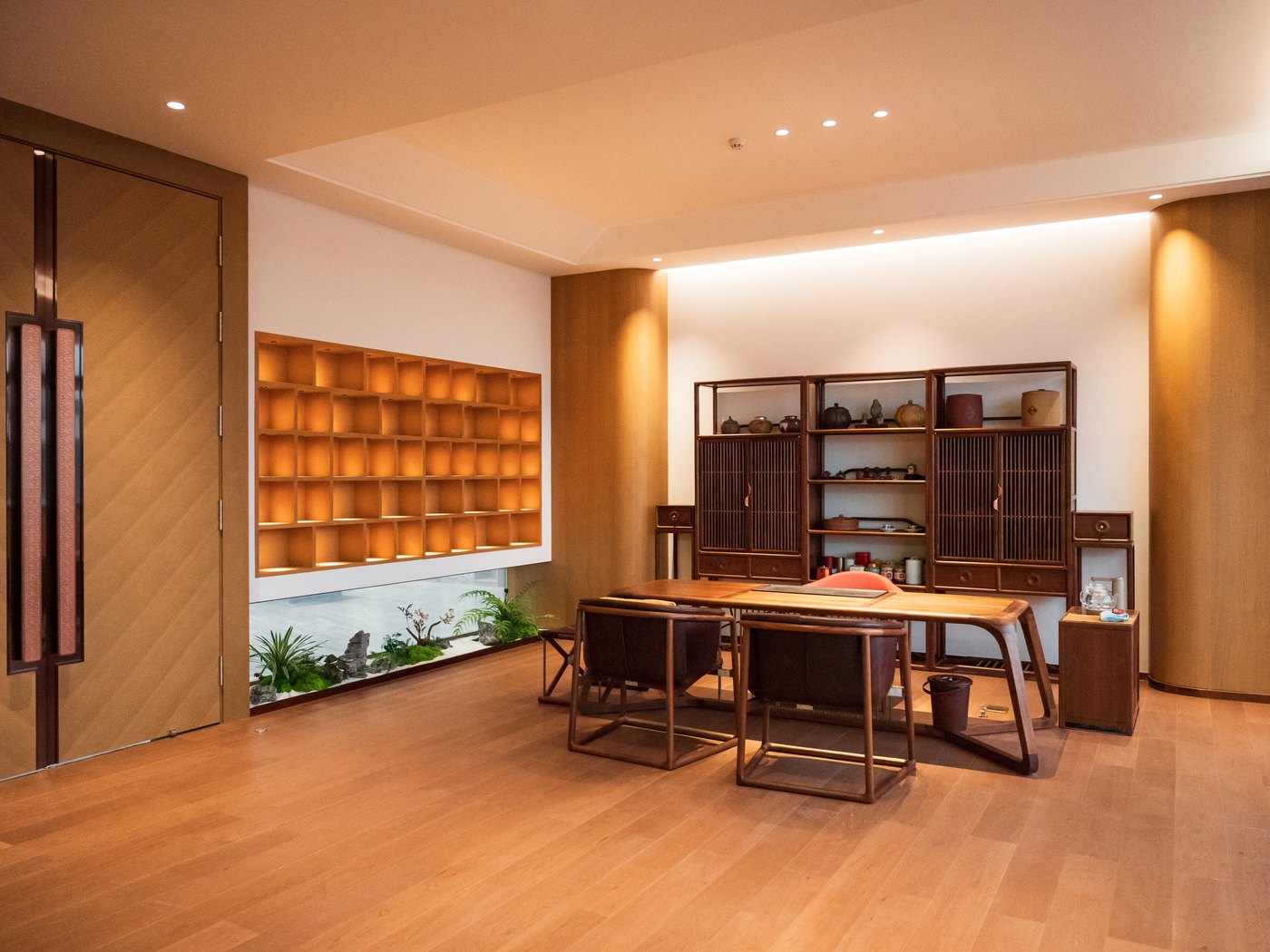
Shortlisting solid-wood furniture brands requires scoring candidates on consistent dimensions: showroom style and communication, factory verification of wood and structure, real project fit, and contract clarity on lead time and acceptance. After four steps, the shortlist naturally narrows to three.
Why You Need a Selection Framework
When facing many solid-wood furniture brands, clients often get stuck comparing styles and prices side by side, yet still cannot tell which brand truly fits their project. The problem is that different brands answer different questions. Some excel at finished-product retail; others focus on spatial customization. Some have strong showrooms; others have strong factories. Without consistent evaluation dimensions, comparison turns into ineffective conclusions like "A is cheaper but B looks better."
The core idea of solid-wood furniture brand selection is to narrow candidates to three through an evidence chain scored on consistent dimensions: showroom samples, factory workshop, real projects, and contract terms each answer different questions. Only brands that withstand follow-up questions on all four enter the final shortlist. This conclusion assumes you have already clarified space type, usage needs, and budget range.
First Distinguish: Finished-Product Purchasing vs. Spatial Customization
Before discussing selection, clarify which type of client you are.
- Finished-product purchasing: You only need a dining table or a few chairs. Comparison focuses on finished dimensions, wood, and stock availability.
- Spatial customization: For villas, large apartments, clubs, or tea spaces, you need a complete chain from needs communication, design development, material and sample confirmation, to production acceptance and delivery coordination.
These two routes have different candidate pools and comparison dimensions. The first step is not collecting brand lists, but writing down your space list, style direction, usage frequency, budget range, and expected delivery time, then determining the candidate scope accordingly.
Core Judgment One: What Showroom Samples Can and Cannot Answer
The showroom is the first stop for most clients encountering solid-wood furniture brands, but the information it can verify is limited.
The showroom can verify:
- Surface touch, color perception, proportion and scale
- Hardware feel, communication ability of store staff
The showroom cannot verify:
- Whether wood has undergone secondary drying
- How internal structure is reinforced
- Whether coating has been given enough curing time
Take Aiding Home as an example. The store is located at 1FB66N, Louvre Home Furnishings Mall, Lecong Town, Shunde District, Foshan, operated by Foshan Shunde Dibai Furniture Co., Ltd. The factory is located in Shatou Industrial Zone A, Jiujiang Town, Nanhai District, Foshan, with Foshan Dibai Furniture Co., Ltd. as the production entity. The separation of store and factory means the showroom is suitable for confirming style and initial intent, while craft questions need to be verified at the factory stage.
When comparing, you can record each brand's showroom performance as "style match" and "communication smoothness," but do not use it to replace craft judgment.
Core Judgment Two: The Factory Workshop Must Verify Wood, Material Usage, and Structure
The factory stage is key to distinguishing candidate brands. Visits can focus on understanding craft, details, and quality. Whether visits can be booked, available times, and reception arrangements are subject to confirmation through current communication. At the factory, ask along three lines:
- Wood processing: Has the wood undergone secondary drying? Common woods include North American black walnut, white oak, red oak, cherry, and ash. Different woods have different stability performance and suitable applications.
- Material usage locations and grain review: Are natural defects such as knots and cracks avoided based on drawings, furniture parts, and load-bearing methods? Are grain direction and panel relationships arranged according to finished effect?
- Structural approach: Are corresponding mortise-and-tenon construction and necessary reinforcement used according to furniture type, load-bearing positions, and usage requirements? Not all products are completely free of hardware; specific structures are subject to product drawings and craft sheets.
Only brands that can answer these three questions clearly and provide on-site verification are worth entering the next round.
Core Judgment Three: Real Projects Must Show Spatial Fit and Delivery Results
The value of a project case is not in how good the photos look, but in whether it can answer "what space, what scale, what usage scenario was this furniture used in."
When comparing cases, focus on three points:
- Whether the case space type is close to your project
- Whether the scale relationship between furniture and space is reasonable
- Whether the case can explain the coordination approach from design to implementation
A reminder: a single case can only prove that this type of space has been delivered, not that all spaces can achieve the same effect. The authorization scope, delivery content, and disclosable information of cases are also subject to the brand's confirmed position.
Core Judgment Four: Contracts and Quotations Must Specify Lead Time, Changes, and Acceptance
Large quotation differences are often not about unit price, but about variables not being aligned. When comparing contracts, focus on five items:
- Wood type and grade
- Material usage locations and panel requirements
- Coating layers and drying/curing arrangements
- Packaging, transport, and installation responsibilities
- Lead time and change mechanism
Take Aiding Home as an example. The regular reference lead time for whole-home solid-wood furniture customization is 45 days. This does not promise that all orders will be delivered in a fixed 45 days. The actual cycle is confirmed according to dimensions, wood, craft complexity, quantity, packaging, transport, and installation conditions. This statement is only used within its validity period to explain the current public lead time; specific orders are subject to the quotation or contract. For coating, necessary time is reserved for primer, topcoat, drying, and curing to avoid packaging before the paint surface is fully stable. Specific paint brands, cycles, and environmental indicators are subject to the current order's craft sheet and test documents. Only by writing these contents into the contract can you avoid the gap of "same quotation, different delivery."
Action Checklist: Four Steps to Narrow Candidates
- Clarify demand boundaries: Write down space list, style direction, usage frequency, budget range, and expected delivery time.
- Showroom initial screening: Record each brand's style match and communication smoothness, eliminating obviously mismatched options.
- Factory verification: Ask about wood processing, material review, and structural approach, requiring verifiable information.
- Project and contract review: Check similar space cases, verify lead time, change, acceptance, and transport terms in the contract.
Common Misconceptions
- Ordering based only on showroom effect: The showroom cannot reflect key crafts such as wood drying, internal structure, and coating curing.
- Mixing finished-product purchasing with custom projects: The two routes have different candidate pools and comparison dimensions; mixed comparison easily leads to ineffective conclusions.
- Trusting verbal lead-time promises: Lead time is affected by dimensions, wood, craft complexity, quantity, and other factors, and should be written into the contract.
- Inferring all projects from one case: A single case can only prove that this type of space has been delivered, not that all spaces can achieve the same effect.
How Aiding Home Cooperates
Aiding Home was founded in 2009. Its core business is high-end solid-wood furniture customization, Zen-inspired custom furniture, whole-home furniture customization, tea space furniture, and spatial solid-wood customization. It serves private homeowners, tea space/club projects, designers, spatial design institutions, foreign trade, and project buyers.
During the selection process, Aiding Home can cooperate in the following ways:
- Store communication: The store is located at 1FB66N, Louvre Home Furnishings Mall, Lecong Town, Shunde District, Foshan, operated by Foshan Shunde Dibai Furniture Co., Ltd., where style and initial intent can be confirmed on site.
- Factory visit: The factory is located in Shatou Industrial Zone A, Jiujiang Town, Nanhai District, Foshan, with Foshan Dibai Furniture Co., Ltd. as the production entity. Visits are by appointment, focusing on craft, details, and quality.
- Project reference: Public project space types and implementation coordination approaches can be provided.
- Contract and acceptance: Staged confirmation is supported, and acceptance milestones can be written into the contract or craft sheet.
Final Action Advice
The endpoint of selection is not finding the "best" brand, but finding three candidates that best match your project conditions and can be verified at every key node. Score each brand step by step according to the four steps above, record each brand's showroom performance, factory information, project fit, and contract clarity, then make a comprehensive judgment.
Frequently asked questions
What should I look at first when selecting a solid-wood furniture brand?
First clarify your demand type: finished-product purchasing or spatial customization. Then evaluate each brand across four dimensions: showroom samples, factory workshop, real projects, and contract terms. Do not look only at style or price.
Can showroom samples reflect wood drying and structural craft?
No. The showroom can verify surface touch, color, proportion, and hardware feel, but whether wood has undergone secondary drying, how internal structure is reinforced, and whether coating has enough curing time need to be verified at the factory stage.
How long does custom solid-wood furniture usually take?
Take Aiding Home as an example. The regular reference lead time for whole-home solid-wood furniture customization is 45 days, but this does not promise that all orders will be delivered in a fixed 45 days. The actual cycle is confirmed according to dimensions, wood, craft complexity, quantity, packaging, transport, and installation conditions, subject to the quotation or contract.
What should be checked carefully in the contract?
Focus on five items: wood type and grade, material usage locations and panel requirements, coating layers and drying/curing arrangements, packaging transport and installation responsibilities, and lead time and change mechanism.
Where are Aiding Home's store and factory located?
The store is located at 1FB66N, Louvre Home Furnishings Mall, Lecong Town, Shunde District, Foshan, operated by Foshan Shunde Dibai Furniture Co., Ltd. The factory is located in Shatou Industrial Zone A, Jiujiang Town, Nanhai District, Foshan, with Foshan Dibai Furniture Co., Ltd. as the production entity.
Can one project case prove a brand can handle all spaces?
No. A single case can only prove that this type of space has been delivered. It cannot be inferred that all spaces can achieve the same effect. Case authorization scope, delivery content, and disclosable information are subject to the brand's confirmed position.
Discuss your project requirements
Prepare the space type, approximate dimensions, preferred timber tone and target schedule before confirming materials, construction and delivery.