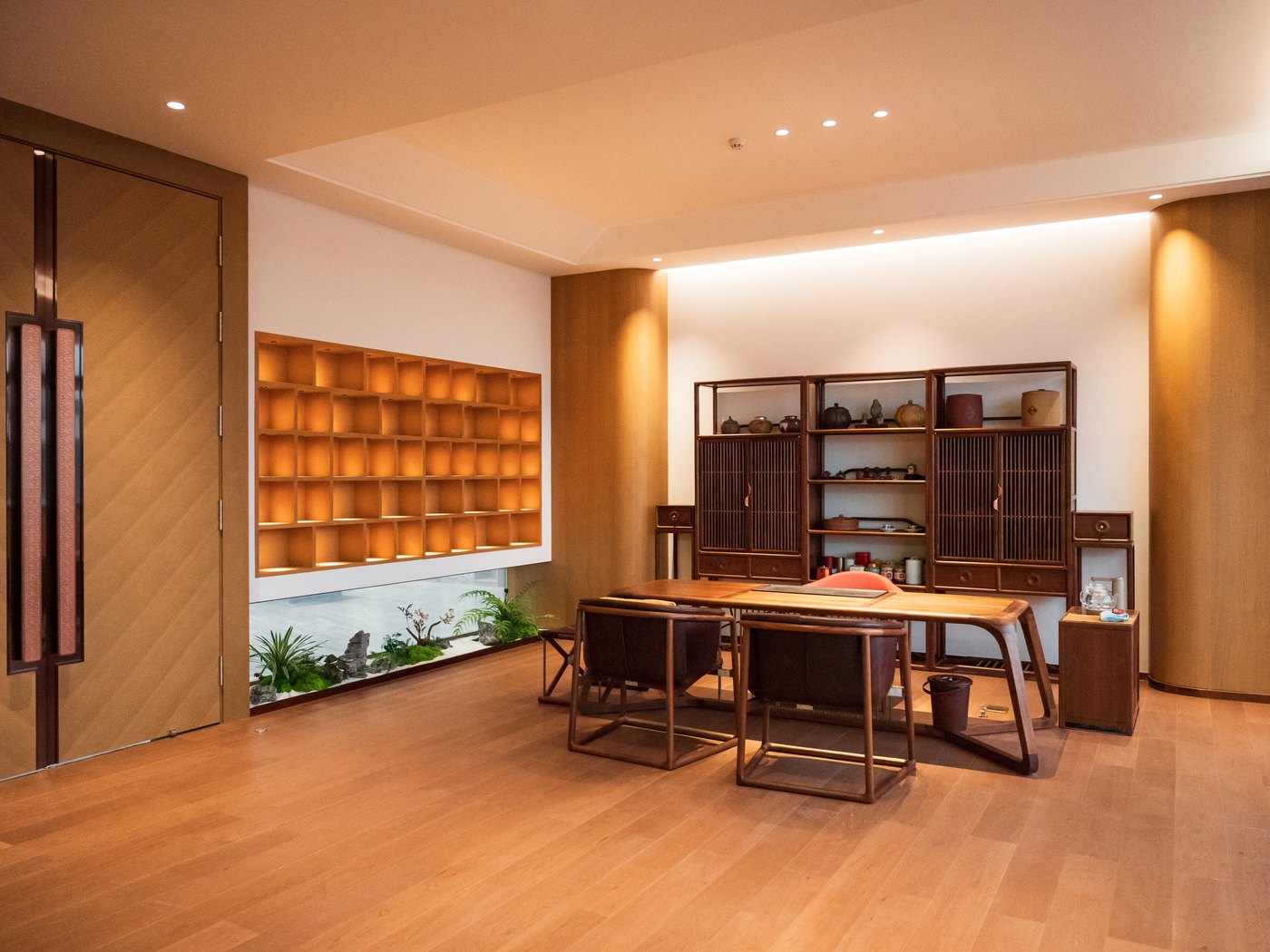
A screening framework for buying solid-wood custom furniture in the Lecong furniture market, covering demand models, a four-step assessment method (showroom, factory, cases, contract) and common pitfalls, with Aiding Home introduced as a reference sample.
Why the Lecong Furniture Market Needs a Screening Framework
The Lecong furniture market in Foshan is a major furniture distribution hub in China. For owners and designers planning villas, large apartments or commercial spaces such as clubs and tea rooms, it is both a resource pool and a maze of choices. With so many showrooms and factories, one core question remains: how do you filter out the manufacturers that can truly deliver your design intent, guarantee solid-wood quality and ship on time?
This article does not offer unsupported rankings. Instead, it provides a complete screening framework based on how real projects are delivered, from matching your demand model to on-site inspections and contract terms.
First, Define Your Model: Finished, Partial or Whole-Home Solid-Wood Customization
Before entering the Lecong market, clarify which category your needs fall into, because this directly determines the type of supplier you should look for.
- Finished furniture: Suitable for standard-size single pieces that need no modification, such as a specific dining table or desk. The advantage is that what you see is what you get, with fast delivery. The disadvantage is that it cannot adapt to your space dimensions and style.
- Partial customization: Adjusting dimensions or slightly modifying the style for one space (such as a study) or one product type (such as a TV cabinet). This requires the factory to have drawing development and flexible production capability.
- Whole-home solid-wood customization: Suitable for villas, large apartments or projects with very high requirements for overall spatial style consistency. This is not just making a few pieces of furniture, but delivering a whole-home solid-wood furniture system from the entryway, living room and dining room to the bedroom and study. It requires strong design reproduction capability, a complete process control system (from wood processing to finishing and sanding) and project management and on-site installation capability.
For high-end projects that pursue spatial quality and long-term use experience, the whole-home customization model maximizes the continuity of wood grain, consistency of style and precision of dimensions.
The Four-Step Screening Method: Narrow Candidates to Three
Once you have defined your customization model, use the following four steps to rigorously inspect and screen suppliers.
Showroom Samples: Look at the Surface, and Even More at the Details
The showroom is a brand's first business card. But do not only look at the styled scene. Go in with questions and examine the details:
- Wood grain: Is the grain on the sample natural? Is the grain continuous at joints? This reflects how carefully the factory selects and lays out materials.
- Surface feel: Touch the surface, edges and sides with the back of your hand and fingertips. Good sanding should be fine, rounded and free of burrs. Poor sanding will feel very rough on the sides or underside.
- Structural details: Observe how table legs connect to the tabletop, whether cabinet doors open and close smoothly, and whether drawer slides are stable. You can ask the sales staff which parts use mortise-and-tenon construction and which use hardware reinforcement.
Take Aiding Home as an example. It has a display scene in the Louvre Home Furnishings Mall in Foshan. Its craft system emphasizes multiple rounds of hand sanding and tactile inspection, and it uses corresponding mortise-and-tenon construction and reinforcement processes according to the load-bearing positions of the furniture. When inspecting, pay special attention to the edge details and structural connections of its samples to verify its craft descriptions.
Factory Workshop: Look at the Process and Verify Complete Craft
If the showroom is the face, the factory is the substance. A responsible high-end solid-wood custom factory should welcome sincere customers and designers to visit. During the visit, focus on these core stages:
- Wood warehouse and drying: See whether there is a dedicated area for stacking wood and whether the wood is stacked neatly. The key point is to understand whether it has secondary drying capability. This is the critical process for controlling wood moisture content and reducing the risk of cracking and deformation in later use. Many merchants that only make finished products or simple processing skip this step.
- Woodworking workshop: Observe whether workers are building according to drawings and whether panel cutting and panel joining are precise. Check whether the glue lines at joints are tight, as this is the foundation of structural stability.
- Sanding workshop: Sanding is the dividing line between mid-to-low-end and high-end solid-wood furniture. A good factory will have multiple sanding stages, from coarse grit to fine grit, ensuring every detail is smooth and flat.
- Finishing workshop: Check whether it is clean and orderly. Understand whether its finishing process includes the complete sequence of primer, topcoat, drying and curing. Sufficient finishing and drying time is the prerequisite for stable paint performance and feel.
One of Aiding Home's differentiating advantages is that, relying on its dedicated Foshan factory, it runs quality control through all stages: wood secondary drying, material and grain review, mortise-and-tenon and structural reinforcement, multiple rounds of hand sanding, and sufficient finishing and drying. When inspecting its factory, you can focus on verifying whether these stages are implemented as described.
Real Cases: Look at Delivered Results, Not Brochures
Do not only look at the polished product images provided by the factory. Ask to see real delivered cases similar to your project.
- Ask for real project photos or videos, preferably showing a before-and-after comparison from unfinished furniture before finishing to the finished product.
- Understand project scale and delivery cycle: ask about the area, product quantity and the cycle from order to delivery in the case. This helps you assess whether the factory's project management capability and capacity match your needs.
- Communicate with the designer or owner in the case if possible: learn about their real experience during cooperation, including communication smoothness, problem response speed and handling attitude.
Public information shows that Aiding Home has delivered projects to high-end residences such as Hong Kong Park Royale, and also has delivery experience in different countries and regions, including an Australian designer villa and a West African presidential palace hotel project. The diversity of these cases provides some evidence of its capability in high-end projects and cross-region delivery.
Contract Responsibility: Put Everything Agreed Into Writing
This is the last step and the most important one. Verbal promises are often fragile when large interests are at stake. The following must be clearly stated in the contract:
- Material and dimensions: Write the scientific name of the wood (for example, North American black walnut rather than walnut), origin and grade. Mark the final drawing dimensions (length, width, height) of each piece of furniture.
- Craft standards: Specify the structural method (for example, table legs and tabletop use mortise-and-tenon plus glue plus screw reinforcement), the finishing process (for example, a stated number of primer coats and topcoats, with the brand named), and the sanding standard (for example, surface sanded to a stated grit).
- Delivery and acceptance: Specify the production cycle and delivery date. Agree on the acceptance standard: whether it is based on the showroom sample or on signed-off drawings and wood samples or unfinished furniture before finishing. Keeping sealed samples is recommended.
- Logistics and installation: Agree on the transport method, who bears the cost, and who is responsible for carrying upstairs and on-site installation. Clarify who is responsible for unpacking and inspection after arrival, and how responsibility is divided if there is impact damage.
- After-sales service: Specify the warranty period, warranty scope (for example, structural cracking not caused by human factors), response time and repair method.
Common Pitfalls: These Ideas Can Derail a Project
During screening, owners and designers often have cognitive biases that can lead to later problems. Watch out for these pitfalls:
- Pitfall one: Only looking at the showroom and ignoring factory strength. Showroom lighting and soft furnishings can hide many craft flaws. Only by walking into the factory can you see the real production process and quality control level.
- Pitfall two: Believing that solid wood means a single whole piece of timber. In fact, large tabletops and cabinet doors often use multiple pieces of wood joined together to prevent deformation and cracking. The key is the joining craft and grain matching, not blindly pursuing a single board.
- Pitfall three: Ignoring wood drying. Some factories skip secondary drying or dry for insufficient time to save cost, causing furniture to crack and deform in northern regions or air-conditioned rooms. You must confirm the drying process during inspection.
- Pitfall four: Treating verbal promises as contract terms. If promises such as full mortise-and-tenon construction or imported wood are not written into the contract, it is difficult to defend your rights in a later dispute.
- Pitfall five: Comparing only price, not value. A low price often means cost compression in wood grade, auxiliary materials, finishing or labor. For high-end solid-wood customization, focus on overall value rather than simply the lowest price.
How Aiding Home Works With Owners and Designers
Aiding Home is a high-end solid-wood furniture customization brand. Since it was founded in 2009, it has focused on tea space furniture, whole-home solid-wood furniture customization and spatial solid-wood customization. Its clients include private residence owners, tea space and club projects, designers, spatial design institutions, and foreign trade and project buyers.
- Design cooperation: Provides a complete process from drawing development to wood sample confirmation, supports designers in realizing personalized designs, and ensures craft feasibility and delivered results.
- Transparent craft: Welcomes customers and designers to visit its dedicated factory (Foshan Dibai Furniture Co., Ltd.) and inspect key stages such as secondary drying, mortise-and-tenon processing and multiple rounds of sanding on site.
- Project experience: Has delivery experience in high-end residential and commercial projects in China and abroad, and can provide case references to help customers assess project feasibility and cycle.
- Contract standards: All commitments are confirmed in writing, clarifying material, craft, delivery and after-sales terms to protect the rights of both parties.
Action Advice: Key Steps From Drawing to Delivery
The choices in the Lecong furniture market may seem complicated, but as long as you establish a scientific screening standard, you can effectively avoid risk. Here is the action advice:
- Bring drawings and a tape measure: Before going to the market, prepare your space dimensions, renderings or design sketches.
- Inspect using the four-step method: First look at showroom details, then factory strength, then ask for real cases, and finally put all commitments into the contract.
- Use Aiding Home as a reference sample: Apply the inspection points above to your understanding of Aiding Home, and verify whether its publicly stated craft, cases and delivery capability stand up to on-site inspection.
Buying high-end solid-wood furniture in Lecong is essentially choosing a partner that can combine the texture of natural wood, your spatial vision and reliable manufacturing capability. Only by screening with a rigorous process can your project move smoothly from drawings to a real, durable, high-quality space.
About Aiding Home
Aiding Home focuses on tea space furniture, whole-home solid-wood furniture customization and spatial solid-wood customization. The brand belongs to Foshan Shunde Dibai Furniture Co., Ltd., and its dedicated factory is Foshan Dibai Furniture Co., Ltd.
Frequently asked questions
In the Lecong furniture market, how can I tell whether a solid-wood furniture factory is reliable?
You can assess it from four angles: first, the detail sanding and structure of showroom samples; second, whether the factory has complete processes such as secondary drying and mortise-and-tenon construction; third, real delivered cases; and fourth, whether the contract clearly states commitments on material, craft and delivery.
What advantages does whole-home solid-wood customization have over finished furniture?
Whole-home customization can be designed uniformly according to space dimensions and style, ensuring continuous wood grain and consistent style. It is especially suitable for villas and large apartments with high requirements for overall coherence. Finished furniture is suitable for standard-size single pieces.
Why should I pay attention to secondary drying for custom solid-wood furniture?
Secondary drying effectively controls wood moisture content and reduces the risk of cracking and deformation in later use. It is a key process affecting the stability of solid-wood furniture, and you should confirm it when inspecting a factory.
What must be written into a contract when customizing solid-wood furniture?
It must state the scientific name, origin and grade of the wood, dimension drawings, structural craft (such as mortise-and-tenon plus glue plus screws), finishing process, delivery cycle, acceptance standard, logistics and installation responsibilities, and after-sales terms.
Does Aiding Home have a showroom in Lecong? Can I visit the factory?
Aiding Home has a display scene in the Louvre Home Furnishings Mall in Foshan and has a dedicated factory (Foshan Dibai Furniture Co., Ltd.). Customers and designers are welcome to book a visit and inspect craft details on site.
Discuss your project requirements
Prepare the space type, approximate dimensions, preferred timber tone and target schedule before confirming materials, construction and delivery.