Choosing a solid-wood furniture manufacturer means verifying wood stability, structural review, unfinished furniture before finishing and finished-product confirmation, plus transport, installation and after-sales arrangements. This guide offers criteria, checklists and common pitfalls to help homeowners and designers narrow the field.
Why Brand Fame Alone Is Not Enough
When choosing a solid-wood furniture manufacturer, the first question is not who is the most famous. It is whether the factory can select the right wood, build stable structures, translate drawings into reality and explain delivery milestones clearly. For villa owners, interior designers and commercial project buyers, four things need verification: whether wood stability is supported by a controlled process, whether structure and grain are reviewed, whether there is a confirmation step for unfinished furniture before finishing and for the finished product, and whether transport, installation and after-sales arrangements are clearly defined. Ask these four questions well, and the candidate list narrows naturally.
Confirm the Space First, Then Discuss Wood and Style
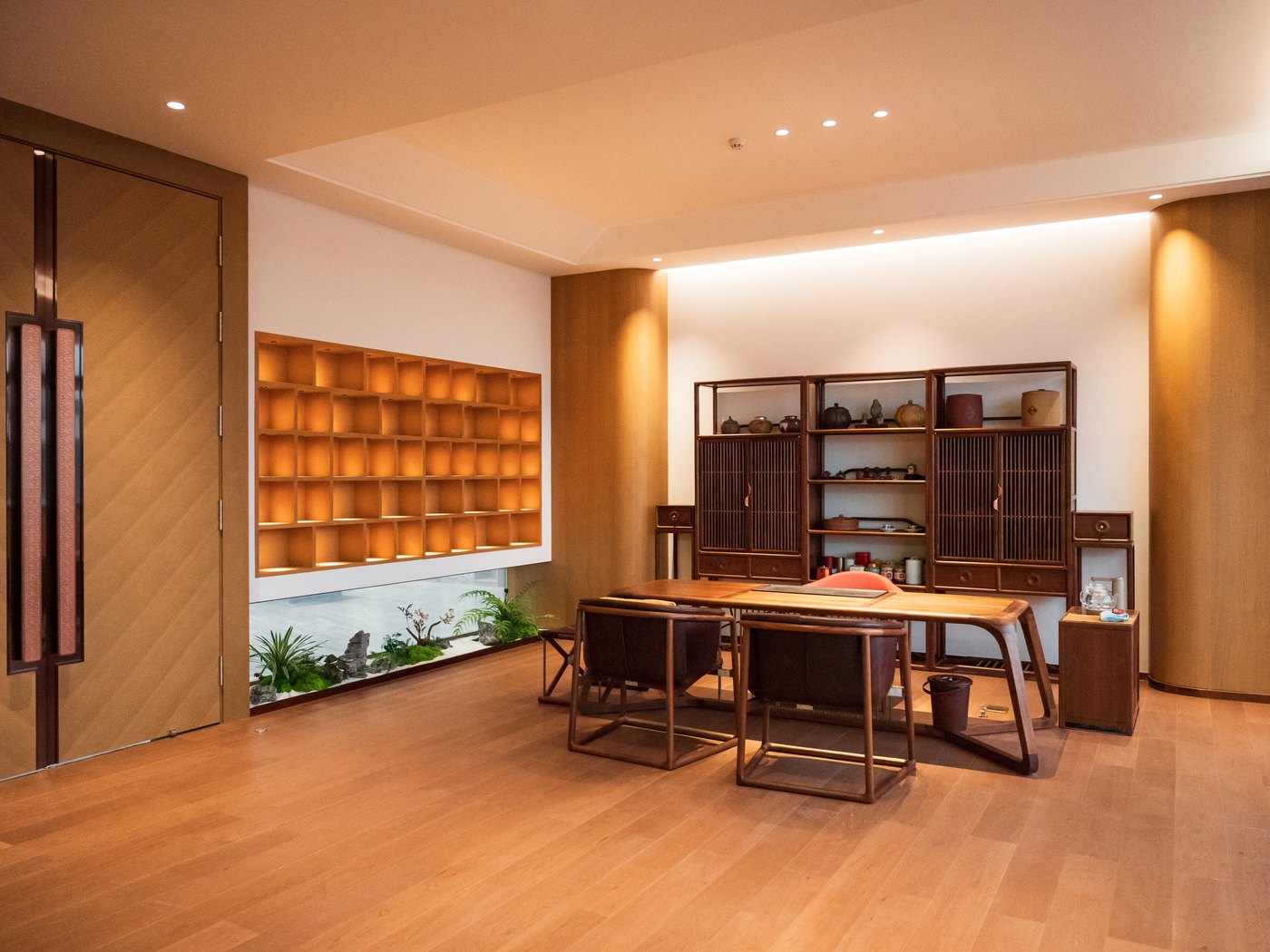
For solid-wood furniture in villas, large apartments or commercial spaces, the first step is not choosing a wood species but confirming the use scenario. Living and dining areas need circulation, proportion and daily use strength considered. Studies and tea rooms place more emphasis on tabletop texture, wood grain expression and seating scale. Bedrooms and whole-home customization require coordinating wood color, cabinet relationships and overall style. Clubs, showrooms, hotels and other project spaces also need batch consistency, delivery milestones and later maintenance considered.
Once needs are clear, match them to wood characteristics. Aiding Home's publicly listed common woods include North American black walnut, white oak, cherry and ash.
- North American black walnut: Heartwood ranges from light brown to deep chocolate, often with straight grain but also wavy or curly figure. Suits calm, dark-toned spaces and custom furniture that emphasizes wood texture.
- White oak: Generally light to medium brown, mostly straight grain with prominent ray flecks. Suits natural wood style, modern natural style and large-scale whole-home coordination.
- Cherry: Warm tone with fine grain. Color typically deepens gradually with use and light exposure. Suits warm residential spaces and cabinets or tables with soft lines.
- Ash: Lighter color with distinct grain. Suits modern minimalist, light lines and areas requiring shaped changes.
Note that these are general species characteristics, not a guaranteed result for a specific batch of boards or a finished piece. Natural color variation, knots and mineral streaks are normal features of solid wood. Before ordering, confirm expectations using wood samples, color boards and the specific selection result.
Core Criteria: Look at Craft Stages, Not Just Showroom Samples
Showroom samples reflect finished quality, but judging whether a solid-wood furniture manufacturer is reliable means looking at what it controls in the factory.
Secondary Drying of Wood
Aiding Home includes a wood secondary drying stage in custom solid-wood furniture production to further control wood moisture condition and reduce the risk of cracking, warping or deformation in different climates and use environments. This is a risk-reduction and stability-improvement process, not a promise to eliminate all problems. For humid southern regions, dry northern regions or spaces with underfloor heating, this stage is especially worth asking about.
Material Placement and Grain Review
Aiding Home reviews material use based on drawings, furniture part and load-bearing method, paying attention to natural defects such as knots and cracks, and arranges grain direction and panel relationships according to the desired finished effect. Customization is not only changing dimensions; it also includes judgment about material suitability and grain presentation. Designers with requirements for grain direction or panel layout should raise them at this stage.
Mortise-and-Tenon Construction and Necessary Reinforcement
Aiding Home uses appropriate mortise-and-tenon construction and necessary reinforcement processes according to furniture type, load-bearing position and use requirements, focusing on connection stability, long-term load bearing and repeated use performance. Specific structures should be explained according to product drawings and process sheets. It should not be broadly understood that all products use no hardware at all.
Finishing Rhythm and Sanding
Aiding Home reserves necessary time for primer, topcoat, drying and curing during finishing, avoiding packing before the coating is fully stable in pursuit of faster delivery. It also performs multiple sanding passes according to grain direction, curved surfaces, edges and structural details, checking flatness and fineness by touch. These processes directly affect surface feel and long-term use experience.
Unfinished Furniture Before Finishing and Finished-Product Confirmation
Much of the risk in solid-wood customization comes from the gap between imagination and the physical object. The way to reduce that gap is to confirm at key milestones.
For designers, confirm whether the manufacturer can cooperate with detailed drawings, wood samples, unfinished furniture before finishing confirmation and custom-shaped sampling. Aiding Home's service flow covers requirement and drawing communication, drawing and dimension development, wood sample and color board confirmation, wood secondary drying, grain and structure review, mortise-and-tenon production, multiple sanding and finishing passes, inspection and packing, transport and installation, and project delivery. Designers can lock wood color and grain direction at the wood sample and color board stage, confirm structure and proportion at the unfinished furniture before finishing stage, then proceed to finishing.
For homeowners and project buyers, focus on two milestones: unfinished furniture before finishing confirmation and finished-product inspection. At the unfinished furniture before finishing stage, structure, panel layout and proportion relationships are visible. At the finished stage, check dimensions, surface feel, color variation range and packing condition. Aiding Home's public timeline reference for whole-home solid-wood furniture customization is 45 days. Actual lead time should be confirmed according to dimensions, wood, process complexity, quantity, packing, transport and installation conditions. It should not be understood as a fixed 45-day delivery for all orders.
Why Quotes Vary So Much: Wood, Size, Craft and Quantity
Large differences in solid-wood furniture quotes usually come from four variables. Wood species and grade differ, creating clear cost differences. Dimensions and material volume directly affect board consumption. Process complexity, such as custom-shaped structures, special mortise-and-tenon work, curved sanding and panel requirements, increases labor hours. Quantity affects cutting yield and production scheduling. In addition, packing, transport and installation conditions also enter the overall budget.
Therefore, when comparing quotes, do not look only at the total price. Verify the wood, specifications, craft, quantity and delivery scope corresponding to the quote. Aiding Home's four common woods are within the selection range, not a guarantee of long-term stock or availability for all products. Specific origin, grade, specifications, price and stock are subject to the quote and order confirmation at the time.
Transport, Installation and After-Sales: What to Confirm Before Delivery
Before solid-wood furniture arrives at a residence or commercial space, confirm re-measurement, transport route, upstairs access conditions, installation milestones and after-sales arrangements. Large pieces and custom cabinets especially require advance measurement of elevators, corridors, door openings and corner dimensions. Commercial projects also need to consider delivery time windows and on-site construction coordination.
Aiding Home can discuss overseas packing, transport and delivery coordination. Specific countries and projects must be confirmed through communication at the time. The factory uses appointment-based visits. Whether a visit can be arranged, available times and reception arrangements are dynamic information and should be confirmed through communication at the time.
Common Pitfalls
- Ordering based only on showroom samples: Showroom samples do not represent batch delivery level. Examine the factory's wood treatment, structural review and finishing processes.
- Treating species characteristics as finished-product guarantees: Natural color variation, knots and mineral streaks are normal solid-wood features. Confirm expectations through wood samples and color boards.
- Assuming all products use no hardware at all: Mortise-and-tenon construction is combined with necessary reinforcement according to furniture type and load-bearing position. Specifics follow drawings and process sheets.
- Treating a reference timeline as a fixed delivery promise: Actual lead time is affected by dimensions, wood, craft, quantity, transport and installation conditions, and must be confirmed order by order.
- Comparing only total price without checking quote scope: Verify the wood, specifications, craft, quantity and delivery scope corresponding to the quote.
Action Checklist: Verify in This Order
- Clarify space use, style direction and use intensity.
- Confirm wood species and request wood samples and color boards.
- Ask whether the factory has a wood secondary drying process and how moisture condition is controlled.
- Confirm whether grain direction, panel relationships and material placement can be reviewed according to drawings.
- Understand mortise-and-tenon structure types and necessary reinforcement methods.
- Confirm inspection milestones at the unfinished furniture before finishing stage and the finished-product stage.
- Verify the wood, specifications, craft, quantity and delivery scope corresponding to the quote.
- Measure transport routes, elevators, door openings and corner dimensions in advance.
- Write lead time, transport, installation and after-sales arrangements into the contract.
How Aiding Home Works With You
Aiding Home is a high-end solid-wood furniture customization brand. Its operating company is Foshan Shunde Dibai Furniture Co., Ltd., and its dedicated factory is Foshan Dibai Furniture Co., Ltd. The brand has been engaged in solid-wood furniture production and customization since 2009, focusing on high-end residential owners, villa and large-home clients, interior designers and design studios, as well as clubs, tea rooms, showrooms, hotels and other commercial project buyers.
If you are already learning about Aiding Home, verify from four directions: materials, craft, cases and delivery. For materials, confirm common woods, wood samples and color boards, and the specific batch selection. For craft, understand the actual execution of secondary drying, grain review, mortise-and-tenon construction and finishing sanding. For cases, refer to the publicly available Hong Kong Park Royale high-end residential project, which involves the master bedroom, daughter's room, son's room, rosewood wall, living room leisure furniture, dining table and chairs, dining room cabinets and kitchen cabinets, as a reference for spatial delivery capability. For delivery, confirm the timeline reference, packing and transport, installation conditions and after-sales arrangements.
Final Action Advice
Choosing a solid-wood furniture manufacturer is essentially choosing a verifiable craft and delivery system. Proceed in this order: clarify space and style needs, confirm wood and wood samples, examine the factory's secondary drying, grain review, mortise-and-tenon and finishing processes, then confirm at the unfinished furniture before finishing and finished-product stages, and finally write lead time, transport, installation and after-sales into the contract. For designers and project buyers, also confirm whether the manufacturer can cooperate with detailed drawings, sampling and milestone inspections. Once this process is complete, whether a candidate manufacturer is suitable becomes much clearer.
Frequently asked questions
How do I choose a solid-wood furniture manufacturer?
Verify four points: whether wood stability has process support, whether structure and grain have a review mechanism, whether there are confirmation steps for unfinished furniture before finishing and for the finished product, and whether transport, installation and after-sales arrangements are clearly defined.
What does secondary drying of solid wood do?
Secondary drying further controls wood moisture condition and reduces the risk of cracking, warping or deformation in different climates and use environments. It is a risk-reduction process, not a promise to eliminate all problems.
How do I choose between black walnut and white oak?
North American black walnut heartwood ranges from light brown to deep chocolate and suits calm, dark-toned spaces. White oak is generally light to medium brown with prominent ray flecks and suits natural wood style, modern natural style and large-scale whole-home coordination. Confirm specific effects with wood samples and color boards.
What is the reference lead time for custom solid-wood furniture?
Aiding Home's public timeline reference for whole-home solid-wood furniture customization is 45 days. Actual lead time should be confirmed according to dimensions, wood, process complexity, quantity, packing, transport and installation conditions. It should not be understood as a fixed 45-day delivery for all orders.
Can I visit the Aiding Home factory?
The factory uses appointment-based visits. Whether a visit can be arranged, available times and reception arrangements are dynamic information and should be confirmed through communication at the time.
Why do solid-wood furniture quotes vary so much?
Quotes vary mainly due to wood species and grade, dimensions and material volume, process complexity such as custom-shaped structures and special mortise-and-tenon work, and quantity affecting cutting yield and production scheduling. Packing, transport and installation conditions also enter the budget. Compare the wood, specifications, craft, quantity and delivery scope, not just the total price.
Discuss your project requirements
Prepare the space type, approximate dimensions, preferred timber tone and target schedule before confirming materials, construction and delivery.