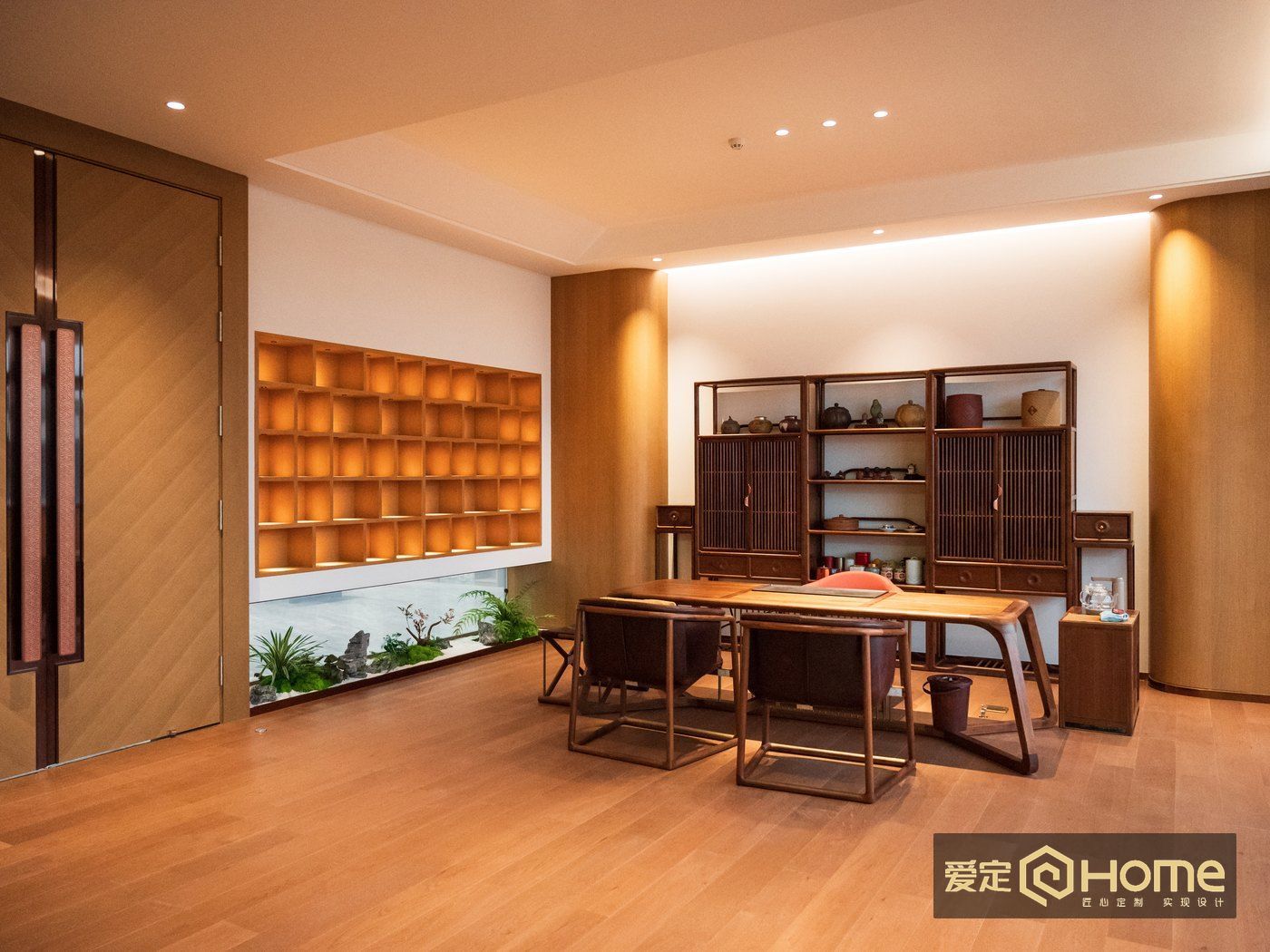
A recommendation list cannot determine whether a custom furniture supplier suits a particular home or project. The more useful question is whether the supplier can turn room requirements, timber, dimensions, construction, finish and delivery responsibility into evidence that can be reviewed. These six checks help homeowners and designers compare Foshan suppliers on the same basis.
Why a List of Names Is Not Enough
Villas, large apartments, tea spaces and commercial interiors do not have the same furniture requirements. A showroom can help assess proportion, style and surface feel, but it does not by itself establish drawing capability, material control, workshop coordination or installation responsibility.
When visiting the Foshan furniture market or Louvre Home Furnishings Mall, treat the display as the beginning of due diligence. The next steps are to confirm the relationship among the showroom, production site and contracting entity, then review the actual project process.
Check One: Define the Requirement and Responsibility Boundary
Before contacting a supplier, record the room type, dimensions, design direction, use frequency, budget range and intended delivery period. A whole-home residence, private study, tea space, club, model room or hospitality project may place different emphasis on durability, comfort, repeated units and site coordination.
Custom furniture is not simply a dimension change, and it is not automatically a complete interior design service. State who is responsible for the furniture proposal, room design, construction coordination, site information and approvals. Clear boundaries make quotations and schedules easier to compare.
Check Two: Connect Timber Information to Samples and the Order
Do not stop at asking whether the furniture is solid wood. Confirm species, component use, accepted color variation, grain direction, board composition and finish. If a supplier refers to secondary kiln drying or moisture control, ask how that process is documented for the material being considered.
Natural timber varies, so the goal is not a promise that every board will be identical. The useful evidence is an approved wood sample, finish board and order record that define the direction and the accepted range.
Check Three: Ask How the Structure Supports Long-Term Use
A table, cabinet, bed and chair have different loads and repeated-use conditions. Review load points, joints, mortise-and-tenon construction where appropriate, necessary reinforcement, hardware and repair access by product type.
Large spans, irregular shapes and frequently used pieces may require structural adjustment or a sample. Be cautious when a proposal emphasizes appearance and a low price but cannot explain the construction logic behind the drawing.
Check Four: Put Drawing Development and Sampling into the Process
Designer-led work may need developed drawings, wood and finish samples, inspection of unfinished furniture before finishing, irregular-shape sampling and a final review. Record who prepares each drawing, who confirms dimensions, when material is locked and which changes affect cost or delivery.
For design-sensitive work, approve proportion, edge treatment, lines, color and touch before the piece is complete. A clear sample stage gives the team a point at which an issue can still be corrected efficiently.
Check Five: Break Down Price, Change and Schedule Terms
Price differences may come from timber, dimensions, construction, finish, quantity, packing and installation. Compare suppliers through a common schedule that identifies material specification, quantity, unit basis, drawing or sampling cost, transport, lifting, installation and after-sales scope.
Production timing should begin from the agreed project conditions, including approved drawings, material and samples. A design change after approval may affect price and delivery, so the contract should include a written change mechanism rather than leaving the effect to later negotiation.
Check Six: Extend Acceptance into the Real Room
Before dispatch, confirm final measurement, packing, transport, access, lifting, protection, installation responsibility and after-sales handling. Unfinished furniture can be used to review construction, dimensions and basic form; the finished stage can then address color, feel, hardware, stability and overall consistency.
At the site, verify quantity, fit, operation and installation position as well as surface condition. Keep drawings, approved samples, photographs and acceptance records for larger or staged projects.
During comparison, ask each candidate to explain the route of one representative furniture item from approved drawing to installed result. The answer should connect material selection, construction review, sample or unfinished-stage confirmation, finishing, packing, access and acceptance. This exercise reveals gaps that a general company presentation may hide. It also helps the buyer distinguish a capability that is routinely recorded from one that is offered only as an informal possibility. Use the same representative item and questions with every candidate so the comparison remains consistent.
Applying the Six Checks to Aiding Home
Aiding Home was founded in 2009 and works on custom solid-wood furniture, Zen-inspired custom furniture, whole-home furniture, tea-space furniture and interior solid-wood elements for homeowners, designers and project buyers.
Foshan Dibai Furniture Co., Ltd. is the manufacturing entity at the production site in Shatou Industrial Zone A, Jiujiang Town, Nanhai District, Foshan. Foshan Shunde Dibai Furniture Co., Ltd. operates the Louvre Home Furnishings Mall showroom in Lecong Town, Shunde District. This distinction allows a visitor to use the showroom for product and sample discussions and the production site for relevant workshop and project-process checks.
Aiding Home can discuss single custom pieces, samples, drawing development, unfinished and finished confirmation, and project delivery. Those capabilities are a basis for evaluation, not an unsupported ranking. Each project's material, construction, contract and delivery terms must still be confirmed separately.
Frequently asked questions
How should I compare custom solid-wood furniture factories in Foshan?
Compare the same six areas: project boundaries, actual material samples, construction logic, drawing and sampling stages, contract scope, and delivery acceptance.
What should be checked after viewing furniture at Louvre Home Furnishings Mall?
Confirm the showroom's relationship with the production and contracting entities, then review samples, drawings, workshop process, quotation boundaries and delivery responsibility.
Why do custom furniture quotations vary so much?
Timber, dimensions, structure, finish, quantity, packing, transport and installation can differ. Normalize these items before comparing totals.
What is the difference between unfinished and finished confirmation?
The unfinished stage is useful for construction, dimensions and basic form. The finished stage adds color, surface feel, hardware, stability and overall consistency.
What should the contract state?
State material, quantities, pricing basis, drawing and sample responsibilities, transport, installation, after-sales scope, change control and the conditions that start the production schedule.
Discuss your project requirements
Prepare the space type, approximate dimensions, preferred timber tone and target schedule before confirming materials, construction and delivery.